Felty: A Standout Display Font for Small Business Branding
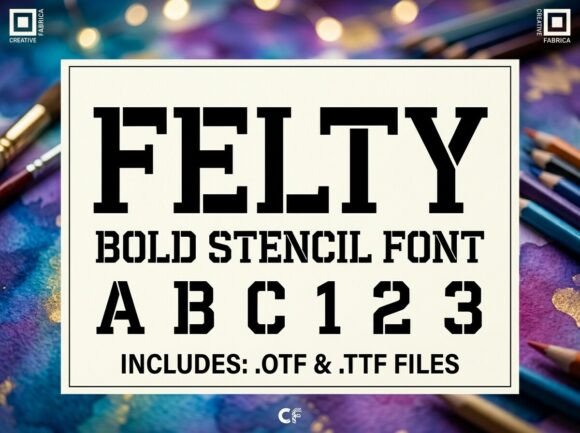
As a small business owner who designs my own labels, social posts, and packaging, I’ve learned that typography isn’t just about looks—it’s one of the quietest yet most powerful tools for building trust. That’s why Felty caught my attention right away. It’s not just another decorative font; it’s a display font with clear intention—bold, expressive, and full of character—designed to anchor your brand where it matters most.
Felty has an artistic, hand-crafted energy—think confident curves, subtle irregularities, and strong visual rhythm. It’s not overly ornate or hard to read at a glance, but it definitely doesn’t blend in. That makes it ideal for businesses that want their name, tagline, or product title to feel intentional and memorable—not generic. Whether you run a ceramic studio, a wellness coaching practice, or a local café, Felty gives your visuals a consistent personality across every touchpoint.
I first used Felty on my handmade candle labels. Paired with a clean sans serif for ingredients and scent notes, Felty became the hero—the name of each fragrance stood out instantly on the shelf and in Instagram Stories. Customers told me they recognized the brand before even reading the text. That’s the power of a well-chosen display font: it builds recognition before a single word is processed.
Here’s where Felty works best in real-world small business materials:
- Logos and shop signage—Especially for boutiques, salons, or creative studios where personality matters more than corporate neutrality.
- Packaging design—It shines on soap bars, tea tins, or greeting cards where you need warmth and distinction without sacrificing clarity.
- Menus and chalkboard-style café boards—Its rhythmic flow mimics natural handwriting while staying legible from a few feet away.
- Social media banners and Pinterest graphics—Felty holds up beautifully in thumbnails and mobile feeds, especially when used for headlines or quotes.
- Thank-you cards and stickers—Small-scale print jobs benefit from its confident stroke weight and open letterforms.
That said, Felty isn’t meant for body copy. It’s a display font—and that’s exactly its strength. Use it where you want focus: your business name on a tote bag, the headline on a limited-edition product launch, or the “New” badge on your online shop banner. For everything else—ingredients lists, website paragraphs, email footers—pair it with something highly readable like a neutral sans serif (think Inter, Montserrat, or Lato) or a warm, relaxed serif (like Merriweather or Cormorant Garamond). This kind of font pairing creates hierarchy, improves scannability, and keeps your brand feeling both expressive and grounded.
Readability is non-negotiable in small business settings. I tested Felty on a 3-inch product label printed on kraft paper—and it held up. At 18pt and above, the letterforms stay distinct, even in lower-contrast environments. On mobile screens, it performs well in banners and story highlights as long as you avoid cramming too much text into tight spaces. Just remember: Felty excels at short bursts of impact, not long paragraphs.
Before rolling Felty out across your entire brand, try it in three places first: your logo mockup, one product label, and a social media graphic. Print them. View them on your phone. Ask a friend to glance at them for two seconds—what do they notice first? Does the tone match your brand voice? Is it easy to read at the size you’re using? These quick checks save time and prevent mismatched expectations down the line.
Licensing matters—especially if you’re selling physical goods or digital templates. Felty is a commercial font, so make sure your license covers use on packaging, merchandise, client work, or downloadable assets like Canva templates. Most reputable font vendors clearly list usage rights, and many offer extended licenses for broader applications. When in doubt, double-check before ordering custom-printed boxes or uploading branded social kits.
For service-based entrepreneurs—like life coaches, photographers, or freelance designers—Felty adds polish without pretension. I saw a branding designer use it for her business card header, then switch to a light-weight sans serif for contact details. The result felt personal, professional, and unmistakably hers. No stock template needed.
Small businesses don’t have big marketing budgets—but we do have strong voices and clear visions. Felty helps amplify that. It’s not about looking “designer-approved.” It’s about looking like *you*, consistently, whether someone sees your brand on a sticker on their laptop, your Instagram bio, or your artisanal jam jar at the farmers’ market.
If your current fonts feel interchangeable—or worse, forgettable—consider how much stronger your message could land with a display font that carries intention. Felty won’t fix unclear messaging or poor photography, but it will help your best work get seen, remembered, and trusted. And in a crowded marketplace, that kind of quiet confidence is worth every penny.